





Event Marketing in a Digital-First World
Event Marketing in a Digital-First World
It’s easy to direct most of our attention to digital output when building a marketing plan these days. Don’t get us wrong, digital marketing matters. In fact over 53% of marketing output now is digital, but what about the other 47 percent? Digital marketing is optimal for communicating to your target audience on how to find you, but in-person marketing creates meaningful, face-to-face connections with patients and customers, complementing and strengthening your digital efforts.
Event Marketing Evolution
Event marketing has changed significantly over the past several years. Before the pandemic, businesses often relied on trade shows, conferences, health fairs and community events as standalone opportunities to connect with their audiences. When in-person gatherings came to a halt, organizations quickly shifted to virtual events, webinars and online experiences to maintain those connections.
As in-person events returned, so did the demand for face-to-face interaction. However, audience expectations had shifted. People still valued the convenience and accessibility of digital awareness of a company’s offerings, making it clear that the most effective event strategies combine both in-person experiences and digital support. Today, successful event marketing doesn’t end when the event is over, it continues through social media, email marketing and other digital channels that keep the conversation going.
Bridging the Gap
While face-to-face interaction is what makes an event memorable, digital marketing is what allows that experience to continue long after attendees go home. Rather than limiting your audience to those in the room, digital tools help extend an event’s reach and keep a company and their offerings top of mind.
Digital marketing begins before the event with social media posts, email campaigns and other promotional content that build excitement and encourageattendance. During the event, photos, videos, and live updates help engage both attendees and those following along online. Afterward, event recaps, photo galleries and testimonials become valuable content that continues to highlight the organization’s mission and impact.
The most successful event marketing strategies don’t end when the event does. Beyond promotion, digital marketing provides insight into an event’s success. Website traffic, social media engagement and audience response help organizations understand what resonated and identify opportunities to strengthen future events. HealthLinks has put this approach into practice across several recent events, each showing a different side of what event marketing can accomplish.
A Campaign Built on Community
Event marketing is most impactful when it brings people together around a meaningful purpose and HealthLi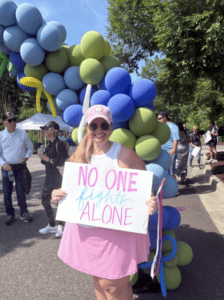 nks saw this firsthand at Coastal Cancer Center’s Annual Survivors Walk. Held in celebration of National Cancer Survivors Day, the event welcomes survivors, families, caregivers, staff, and community members to honor the strength and resilience of those impacted by cancer. The weekend kicked off the night before with Coastal Cancer Center’s Annual Waves of Hope Gala, which this yearraised over $160,000 for the Carolina Cancer Foundation through a silent auction. Katharine McConnell, who grew up attending Relay for Life events, says event marketing matters because it shows a practice’s relationship with its community.
Success here wasn’t measured by attendancealone, but by the lasting sense of community the weekend created. Social media promotion built awareness beforehand, while photos and videos kept the celebration going long after, with survivors and community members still sharing memories and gratitude online weeks later.
 Building Relationships, One Round at a Time
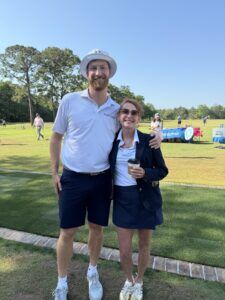
HealthLinks hosted this year’s third annual Golf Tournament at The Links at Stono Ferry. The event brought out 140 golfers to raise money for local Parkinson’s programs, including Rock Steady Boxing scholarships and Parkinson Pacers.
Sponsors, local business owners, and healthcare professionals spent the day alongside each other, building and growing strong relationships that will last throughout the future. HealthLinks CEO CullenMurray-Kemp, whose late father lived with Parkinson’s, has grown the tournament each year,and this year’s group raised $25,000 that went toward
Parkinson’s disease-related causes. The eventalso had a live demonstration by MUSC Wellness’s Rock Steady Boxing team that included people living with Parkinson’s and their families.
It’s this kind of event, one that mixes fundraising, community, and networking, that shows why face-to-face gatherings still hold weight even as digital marketing continues to grow.
Putting a Face to the Practice
In May 2026, HealthLinks andDel Webb at Cane Bay partnered together to host their annual Health and Wellness Fair. The event boasted over 50 local health and wellness providers to come together for an early-afternoon event for residents in the community. HealthLinks Marketing Director Ciara Iorio helped organize the event and staffed Coastal Vascular & Vein Center’s table, answering questions about CVVC and bringing awareness about vascular diseases.
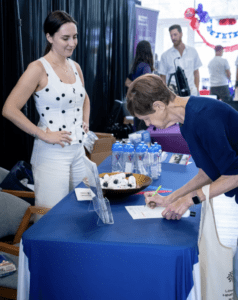
Iorio says that in healthcare, people don’t always trust professional advice in the digital space without backing it up with trusted human connection. This is especially true for specialty healthcare practices, where patients are often making significant medical decisions. Older adults, who make up a large portion of many specialty practices’ patient populations, frequently appreciate the opportunity to ask questions in person, meet providers, and build trust before scheduling an appointment. Events like health fairs create those opportunities in ways that digital advertising alone often cannot.
“You can’t replace human-to-human connection. There’s so much noise on phones, social media, and email. A face-to-face interaction goes a long way,” Iorio says. “Building trust is so important, and doing that in person goes a lot further than through social media.”
Iorio says that digital and event marketing are not two separate entities, they work together. All people need is a push to attend the event, whether that be from social media posts, the HealthLinks Magazine calendar listing, in-person flyers or email blasts providing the event’s details.
From Introduction to Appointment
The core of traditional event marketing holds a simple goal of getting in front of new patients. Health fairs, golf tournaments, and community walks put healthcare providers directly in the same room as people who may not yet know their practice exists. That face time can turn into an appointment down the line, something a social media ad or email blast can’t always accomplish on its own. For healthcare marketers, this is what makes event marketing worth the investment. It’s not just about visibility, it’s about creating the first point of contact that eventually brings someone through the door.
As marketing continues to evolve, one thing remains the same: people connect with people. Digital marketing extends reach, but in-person events build the trust and relationships that keep patients and communities engaged long after the event ends. The strongest results come from pairing meaningful face-to-face interaction with digital touchpoints.
No Comments
Sorry, the comment form is closed at this time.